




How to Find a Criminal Defense Lawyer After an Arrest in 2026
After an arrest, the first move is to stop talking to police and contact a criminal defense lawyer right away. Once you have that protection in place, choose your attorney based on three things: jury trial experience, familiarity with the local courts, and direct access to the lawyer who will actually handle your case. Years licensed, a large advertising budget, and a promised outcome are not reliable signals. At The Leiva Law Firm, we have spent more than 25 years trying cases in Northern Virginia, from traffic offenses to murder, and what happens in the first hours after an arrest often shapes the rest of the case.
This guide walks through what to do immediately, how to find and vet attorneys, the questions that separate a trial lawyer from a lawyer who only settles, and how criminal defense fees work.
What to do first: protect your rights after an arrest
You are under no legal obligation to talk to the police. Anything you say voluntarily can be used against you, so the single most important step after an arrest is to stay silent about the facts of your case until you have spoken with a lawyer.
It also helps to understand who you are dealing with. Police are legally allowed to lie to you during questioning. The U.S. Supreme Court confirmed this in Frazier v. Cupp, which held that deceptive interrogation tactics, such as falsely telling a suspect that a co-defendant already confessed, do not automatically make a resulting statement inadmissible. Officers can use pressure and factual falsehoods to get an admission. Your right to remain silent is the one reliable protection against that.
The practical steps in the first hours are simple:
- Say clearly that you are exercising your right to remain silent and that you want a lawyer.
- Do not explain, argue, or try to talk your way out of the situation.
- Do not discuss the facts of the case with anyone until your attorney is involved.
What about your phone call?
The idea of a single guaranteed phone call is mostly a movie invention. In Virginia, jail standards require that people being booked be allowed to make at least two local or long-distance calls during the booking process. The more important point is that jail calls are recorded and monitored. Prosecutors regularly use those recordings, and an apology or an offhand comment about the arrest can show up later as an admission. Use that call to reach a family member or a lawyer, not to talk about what happened. Remember that when the Constitution and Bill of Rights were drafted, phones did not exist, so this myth that you have a right to a phone call is madeup.
Why hiring a lawyer quickly matters in Virginia
Virginia moves fast after an arrest, which is why waiting even a day or two to hire a lawyer can cost you. Under state law, a person who is arrested must be brought before a magistrate without unnecessary delay for an initial bail decision. If the magistrate denies bail or sets a bond the family cannot meet, Virginia Code § 19.2-158 requires that the person be brought before a judge on the next day the court is open.
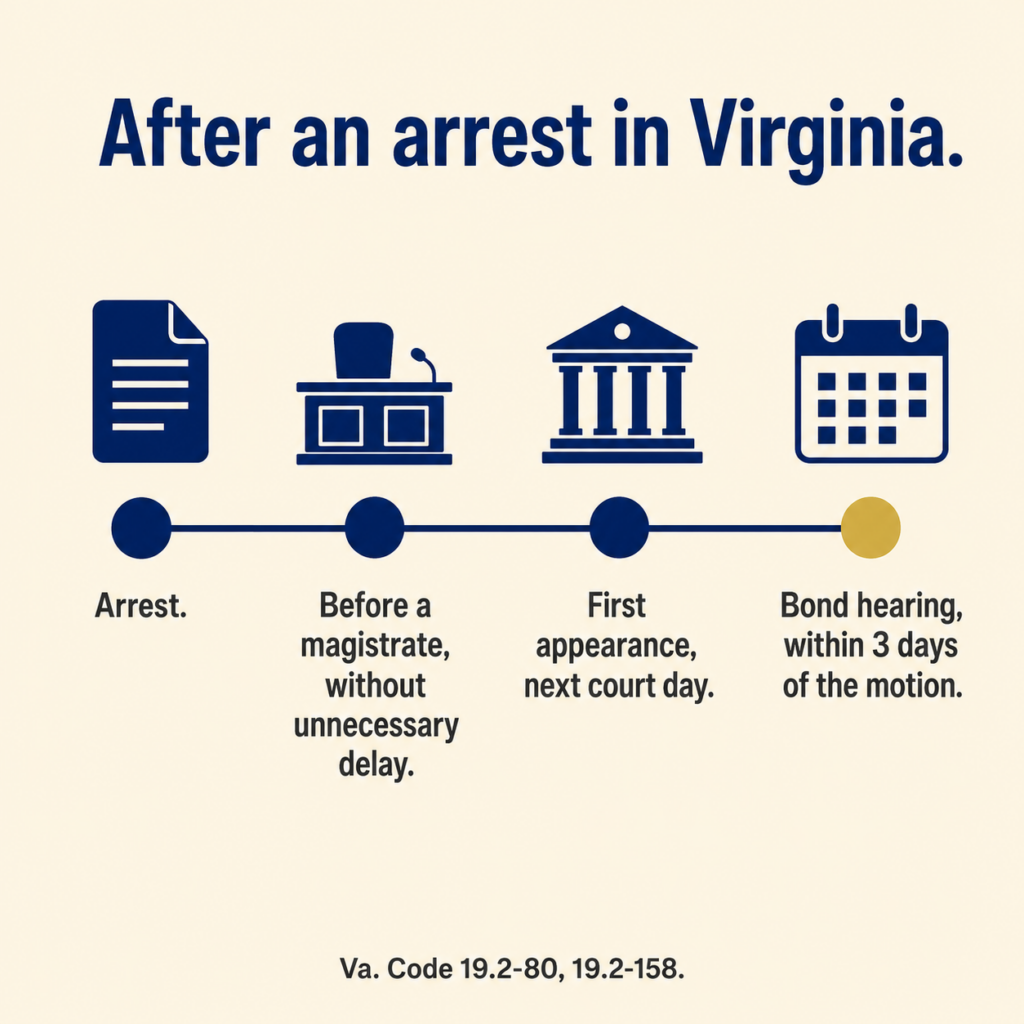
The window matters most for bond. Once your attorney files a motion to set or modify bail, the court must hold a hearing as soon as practicable, and no later than three calendar days after the motion, not counting weekends and holidays. If no attorney is in place, that clock does not start. The result is often days of avoidable jail time while a family scrambles to find counsel. Getting a lawyer involved early is what triggers the first real chance at release.
How to find criminal defense lawyers to consider
Start with the sources most likely to point you to an experienced trial lawyer:
- Referrals from people you trust, including other attorneys. A lawyer who refers criminal cases usually knows who actually tries them.
- The Virginia State Bar lawyer lookup, which confirms whether an attorney is licensed and in good standing and shows any public disciplinary history.
- Independent recognition and peer ratings, such as Martindale-Hubbell, Best Lawyers, and Super Lawyers, which signal a strong professional reputation.
Ratings and awards are a useful starting filter, but they measure reputation, not courtroom record. A lawyer can hold strong ratings and still have tried very few jury trials. Treat directories as a way to build your shortlist, then verify trial experience directly in the consultation.
Public defender or private attorney?
If you cannot afford an attorney, the court can appoint one. Eligibility is strict. Under Virginia’s 2026 indigency guidelines, your available funds generally must fall at or below 125 percent of the federal poverty level.
| Household size | 2026 maximum annual income to qualify |
|---|---|
| 1 person | $19,950 |
| Family of 4 | $41,250 |
A judge can appoint counsel above these limits in exceptional circumstances, but that is uncommon and has to be documented in writing. In a high cost-of-living region like Northern Virginia, most working and middle-income households will not qualify, which means the majority of people arrested here have to hire private counsel. Court-appointed lawyers include many capable attorneys, but you do not get to choose who is assigned to you, and their caseloads are heavy. If you are hiring privately, it is worth doing the vetting carefully.
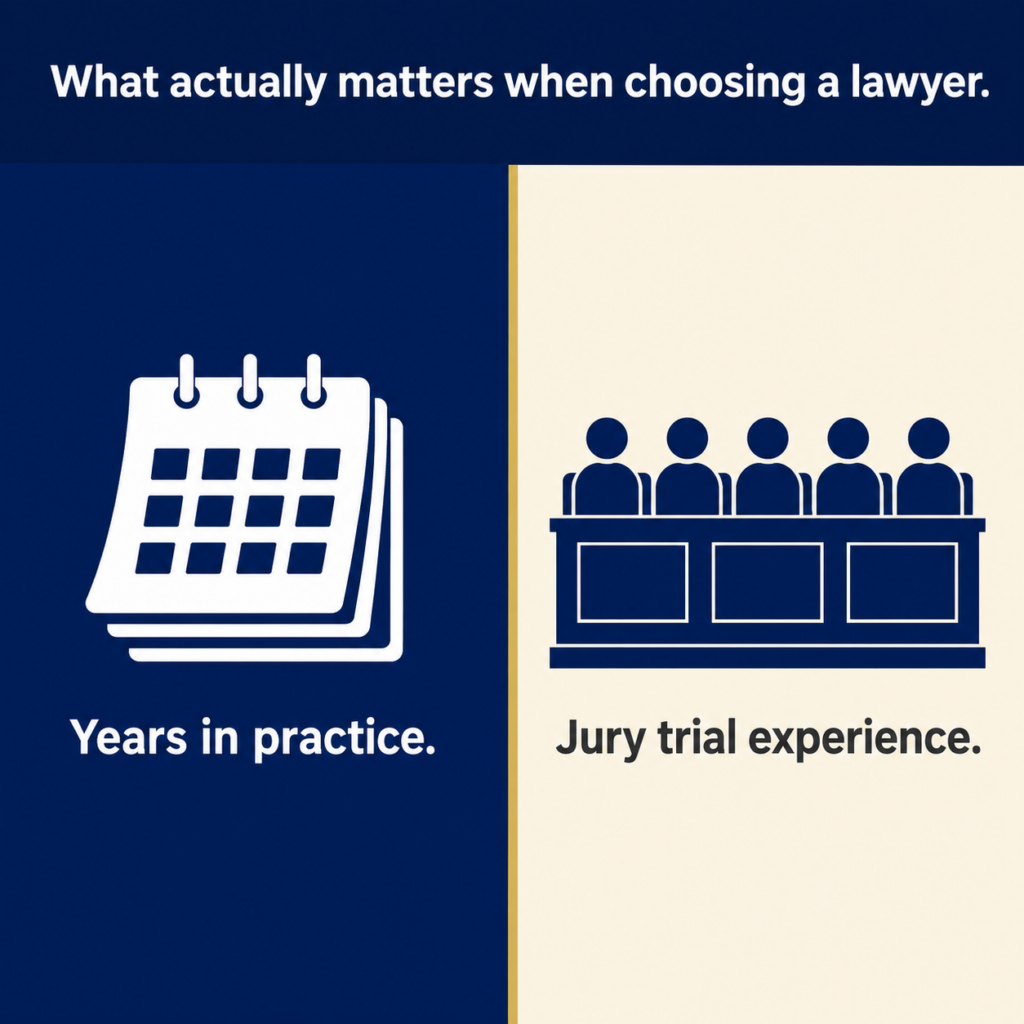
The most important factor: jury trial experience

Trials have become rare. In fiscal year 2024, 97.2 percent of federal criminal cases ended in a guilty plea, leaving only 2.8 percent resolved at trial. Roughly 95 percent of state felony convictions also come from pleas. Because so few cases ever reach a jury, many attorneys have handled few jury trials, or none, even after decades in practice.
That is why years in practice can be misleading. What matters is whether the attorney has actually tried cases in front of a jury. As I often tell people, a fighter’s years in the gym matter less than how many real fights they have had. The same is true for a trial lawyer.
Trial experience also changes the outcome even when a case never goes to trial. Prosecutors know which attorneys will take a case to a jury and which ones are looking to plea everything out. When the lawyer across the table has tried cases before a jury, the prosecutor has to account for the risk of losing, and that tends to produce better offers. You can see the kinds of results that trial readiness produces in our case results, which include acquittals in serious felony cases and a federal RICO murder indictment dismissed before trial. One of those acquittals, in a murder case, was featured on NBC Dateline and is covered in our media coverage.
Questions to ask before hiring a criminal defense lawyer
A consultation is your chance to test the attorney directly. Start with experience, then push past the years to the courtroom record:
- How many jury trials have you handled?
- What kinds of cases have you tried, and how do they compare to mine?
- How often do you go to trial rather than settle?
- Who will actually handle my case day to day, you or an associate?
- What are the realistic outcomes in a case like this, and what are the risks?
- How, and how often, will you keep me updated?
- How do you charge, and what does the fee cover?
The trial questions are the ones most people skip. Asking how long someone has practiced is fine, but the follow-up is what counts: how many jury trials, what kind, and how often you go to trial.
The question about who handles your case matters too. At larger firms, the attorney you meet is often not the one who ends up doing the work. We built our firm the other way. When you hire us, you work directly with Manuel E. Leiva, not a rotating cast of junior associates. And because most complaints about lawyers come down to poor communication, we return calls and emails within 24 hours and send clients their discovery and case updates as they come in.
The relationship also matters more than people expect. You are going to depend on this person through a stressful process, so meet the lawyer, interview more than one if you can, and go with the one you feel comfortable with. You can learn more about Manuel Leiva’s background and trial record on his attorney profile.
Red flags when choosing a criminal defense lawyer
A few warning signs should give you pause:
- Guaranteed outcomes. No honest lawyer can promise a dismissal or an acquittal before studying the case. Virginia’s Rule 7.1 prohibits attorney advertising that creates an unjustified expectation about results. A guarantee is both a false promise and an ethics problem.
- High-pressure sales tactics. It is rare that you need to hire a lawyer on the spot. If someone pushes you to sign immediately, slow down. Take 24 hours, write down your questions, and call back before you commit.
- No clear answer on who does the work. If the firm will not tell you which attorney handles your case, assume it may not be the person in front of you.
- A pitch built on marketing instead of record. Awards and slogans are easy to buy. A record of trying cases in court and clean standing with the Virginia State Bar are not.
How much does a criminal defense lawyer cost?
Criminal defense is priced differently from personal injury. Personal injury lawyers work on contingency and take a percentage of what they recover. That is not allowed in criminal cases, so criminal defense attorneys generally charge either a flat fee or an hourly rate against a retainer.
| Fee structure | How it works | What it means for you |
|---|---|---|
| Flat fee | One agreed price for a defined stage of the case | Cost certainty. If the case gets complicated, the extra work is on the attorney, not your bill |
| Hourly rate | You are billed for time against an upfront retainer | Costs can climb quickly with motions, discovery, and added court dates, and the retainer may need topping up |
A paid consultation is normal in criminal defense, and it is often a good sign. The consultation itself involves reviewing your charging documents, assessing your situation, and giving you specific advice on what to do next, so you are getting substantive legal analysis rather than a marketing presentation.
On cost generally, my advice is not to price yourself out before you even make the call. There is truth to the old saying that you get what you pay for, but people also assume good lawyers are out of reach when they have not asked. Meet with experienced attorneys and have the fee conversation directly.
Why local court experience matters in Northern Virginia
Where your case is filed changes how it should be handled. A lawyer who practices regularly in Arlington, Alexandria, Fairfax, Loudoun, and Prince William knows the local judges, the Commonwealth’s Attorneys, and how each courtroom tends to operate. That knowledge shapes bond arguments, plea negotiations, and trial strategy in ways an out-of-area attorney cannot match.
The stakes on local knowledge are highest in federal court. The U.S. District Court for the Eastern District of Virginia, which sits in Alexandria, is known nationally as the “Rocket Docket” for its speed. It enforces the Speedy Trial Act strictly, requiring felony trials to begin within 70 days of the first appearance, and it rarely grants continuances. An attorney who does not know that pace and those expectations is at a serious disadvantage. We handle criminal cases throughout Northern Virginia and represent individuals charged with federal offenses in the Eastern District of Virginia, and we serve clients in both English and Spanish.
What is really at stake: consequences beyond sentencing
The sentence a judge hands down is often only part of the cost of a conviction. Many people walk into court focused on the court date and do not realize how far the consequences can reach.
| Area | What a conviction can trigger |
|---|---|
| Immigration | Under federal law, a conviction for an aggravated felony or a crime involving moral turpitude can lead to deportation, even for lawful permanent residents |
| Security clearance | In the D.C. area’s contractor and government workforce, a conviction or even pending charges can suspend or cost you a clearance under federal adjudicative guidelines |
| Firearm rights | A felony conviction brings an absolute ban on possessing firearms, and restoring those rights takes a separate multi-step petition |
| Voting rights | A felony conviction can still affect voting rights in Virginia, though recent federal litigation has narrowed when disenfranchisement applies |
| Employment and record | A conviction can follow you on background checks for years, affecting jobs, housing, and professional licenses |
A strong defense looks past the immediate charge and works to protect all of it. That means understanding what a given outcome would mean for your job, your immigration status, and your future, and building the case with those consequences in mind from the start. You can read more about how we approach criminal cases on our Fairfax criminal defense page.
Talk to a Northern Virginia criminal defense lawyer
If you or someone you love has been arrested, do not wait. The first days set the direction of the case, and the sooner an attorney is involved, the more can be done, starting with your release. I handle these cases personally, and I will give you a straight assessment of where you stand and what your options are. Contact The Leiva Law Firm to schedule a consultation.

