




Red Flags When Hiring a Personal Injury Attorney
The biggest red flags when hiring a personal injury attorney include guarantees of a specific outcome, demands for upfront payment, vague or one-sided fee agreements, no verifiable case results, no trial experience, poor communication, and unsolicited contact after your accident. Any one of these signals that the attorney may not be equipped to handle your case effectively and/or is looking for a quick settlement.
At The Leiva Law Firm, we’ve represented injury victims in Northern Virginia for over two decades, including a $4 million traumatic brain injury settlement. We’ve also seen what happens when clients come to us after a previous attorney mishandled their case. The patterns are consistent, and the warning signs are almost always visible from the start.
Below, we break down each red flag, explain why it matters, and describe what you should be looking for instead.
They Promise a Guaranteed Outcome
No attorney can ethically guarantee that you will win your case or receive a specific dollar amount. Legal ethics rules across every state, including Virginia, prohibit attorneys from promising results. If a lawyer tells you during a consultation that your case is “a sure thing” or guarantees a specific settlement number, that is a serious warning sign.
Personal injury cases involve variables that no one can fully control: the severity of your injuries, the available insurance coverage, the strength of the evidence, the judge assigned to the case, and whether the defendant disputes liability. A competent attorney will explain the realistic range of outcomes based on the facts of your case. They will tell you where the strengths are and where the risks are.
An attorney who leads with guarantees is either inexperienced enough to believe them or desperate enough to tell you what you want to hear to get your signature on a retainer.
What to look for instead: An honest assessment. During consultations, we tell prospective clients the truth about their case, including the parts they might not want to hear. A candid evaluation builds a stronger attorney-client relationship and leads to better decisions throughout the case.
They Ask for Money Up Front
Personal injury attorneys work on contingency. That means the attorney gets paid a percentage of your recovery, and only if you win. You should not be asked to pay a retainer, a flat fee, or any kind of upfront payment to start your case.
If an attorney asks for money before they’ve done any work on your behalf, that’s a significant red flag. The FTC’s consumer guidance on hiring lawyers notes that in a contingency arrangement, the client pays nothing unless the case results in a recovery.
There is one narrow exception: some attorneys may advance case costs (filing fees, expert witness fees, medical record retrieval) and recover them from the settlement, while others may ask you to cover those costs as they arise. This should be spelled out clearly in the retainer agreement before you sign. But there should be no attorney’s fee charged until and unless you receive compensation.
What to look for instead: A clear contingency fee structure explained in writing at the outset. At The Leiva Law Firm, personal injury consultations are free, and we do not charge any fees unless we recover compensation for you.
The Fee Agreement Is Vague or One-Sided
Before you sign a retainer agreement, read every word of it. The BBB recommends getting a written fee agreement and asking for clarification on anything you don’t understand. If an attorney becomes evasive when you ask about fees, that is a problem.
Red flags in a retainer agreement include:
- Vague or fluctuating fee descriptions with no clear percentage
- Clauses requiring you to repay the attorney’s fees even if you lose
- Provisions that prohibit you from consulting with another attorney or seeking a second opinion
- Language that restricts your right to fire the attorney
- Pressure to sign immediately without time to review
A retainer agreement should be straightforward. It should state the contingency percentage (typically 33% to 40%), explain how case costs are handled, and make clear that you have the right to terminate the representation at any time.
What to look for instead: Transparency. A good attorney will walk you through the agreement and answer questions without hesitation. You should understand exactly how fees are calculated before signing anything.
They Have No Verifiable Personal Injury Track Record
Personal injury law involves complex medical evidence, insurance company tactics, expert witness coordination, and trial preparation. An attorney who primarily practices in unrelated areas (estate planning, immigration, real estate) may not have the depth of experience a serious injury case requires.
If the attorney can’t point to real outcomes in personal injury cases that’s a red flag. A strong track record is the most reliable indicator that an attorney can handle the complexities of your case.
This doesn’t mean an attorney must practice only personal injury law to be effective. What matters is demonstrable depth. Manuel Leiva handles both criminal defense and personal injury, holds Top Lawyer awards in both practice areas, and has tried cases in both areas throughout a 25-year career. Earlier in his career, he defended physicians in medical malpractice lawsuits, which means he understands how the defense and insurance companies build their cases. That perspective directly informs how he approaches personal injury claims on the plaintiff side. The key distinction is between an attorney with proven results in PI and one who lists it as a service but has no track record to show for it.
They Have No Trial Experience
This is one of the most overlooked red flags, and one of the most consequential.
Many personal injury attorneys have never tried a case before a jury. They handle cases exclusively through settlement negotiations, and if the insurance company’s offer is inadequate, they either accept it or refer the case out. An attorney without trial experience has no credible leverage in negotiations, because the insurance company knows the threat of trial is empty.
Trial readiness changes the entire dynamic of a case. Insurance adjusters and defense attorneys assess the opposing lawyer’s track record. When they know the plaintiff’s attorney has a history of going to trial and winning, they adjust their offers accordingly.
Ask any prospective attorney: How many cases have you taken to trial? What were the outcomes? If the answers are vague or the attorney admits they’ve never tried a case, consider what that means for your claim.
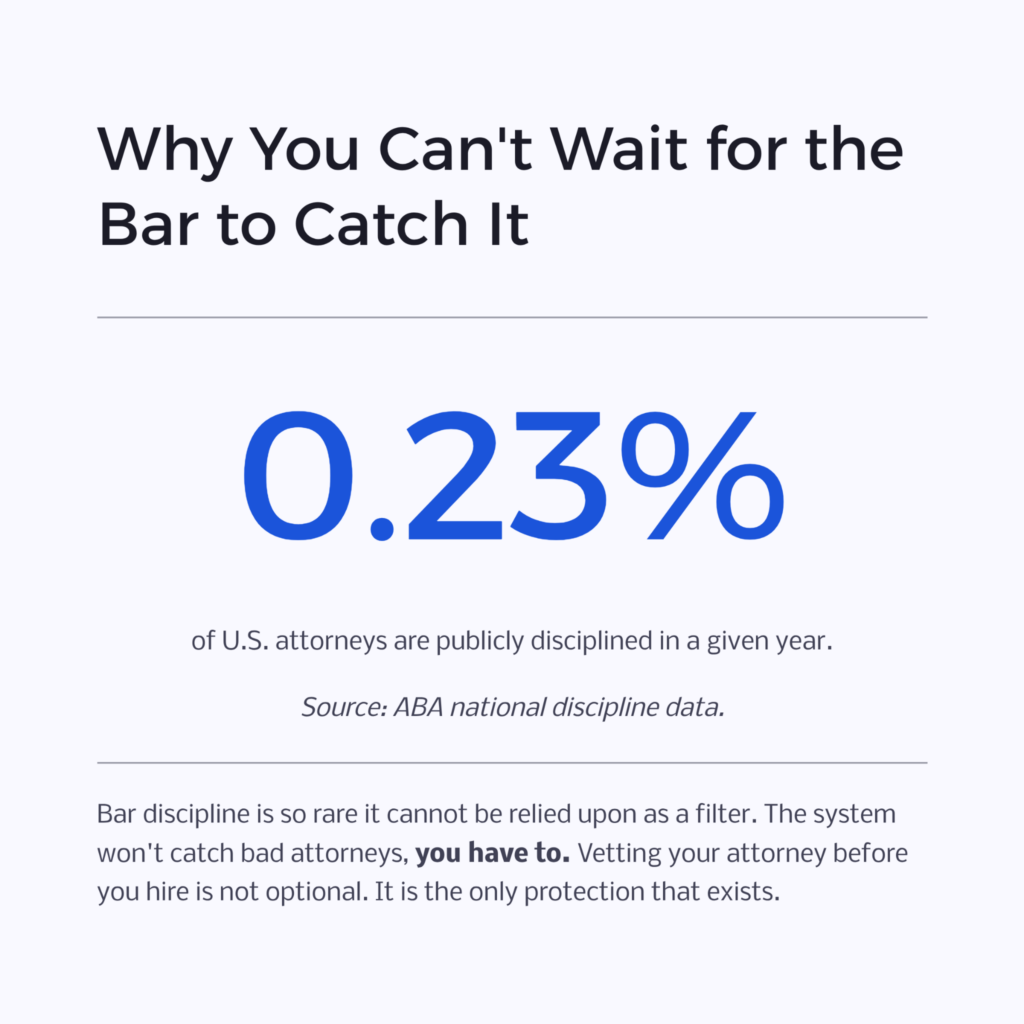
You can verify an attorney’s credentials and standing through the Virginia State Bar’s attorney directory, which maintains records on all licensed attorneys in the Commonwealth.
Communication Is Already a Problem
Pay attention to how a law firm communicates before you hire them. If you’re having trouble getting responses during the consultation phase, the problem will only get worse once they have your signed retainer.
Warning signs include:
- Phone calls and emails that go unanswered for days
- Vague or evasive answers to direct questions
- No clear plan for how the attorney will keep you updated on your case
The BBB advises asking upfront: “How will I contact you throughout the process? How often will you update me?” If the attorney can’t commit to a communication plan, that tells you something about how they run their practice.
At The Leiva Law Firm, clients work directly with Manuel Leiva. Cases are not delegated to junior associates or managed by case coordinators. When you call, you reach your attorney.
They Approached You First
If an attorney contacts you after an accident, whether by phone, in person at the hospital, or through social media, be cautious. This practice, sometimes called “ambulance chasing,” is widely considered unethical and is restricted or prohibited in most states.
The California Bar’s consumer guide explicitly warns: be wary of attorneys who approach you unsolicited to offer legal services. Legitimate attorneys build their practices through reputation, referrals, and their track record. They do not need to solicit accident victims.
This also applies to “runners” or third-party representatives who approach you on behalf of a law firm. If someone shows up at your door or your hospital room with a business card and a retainer agreement, that is not a firm you want representing you.
Their Online Reputation Raises Concerns
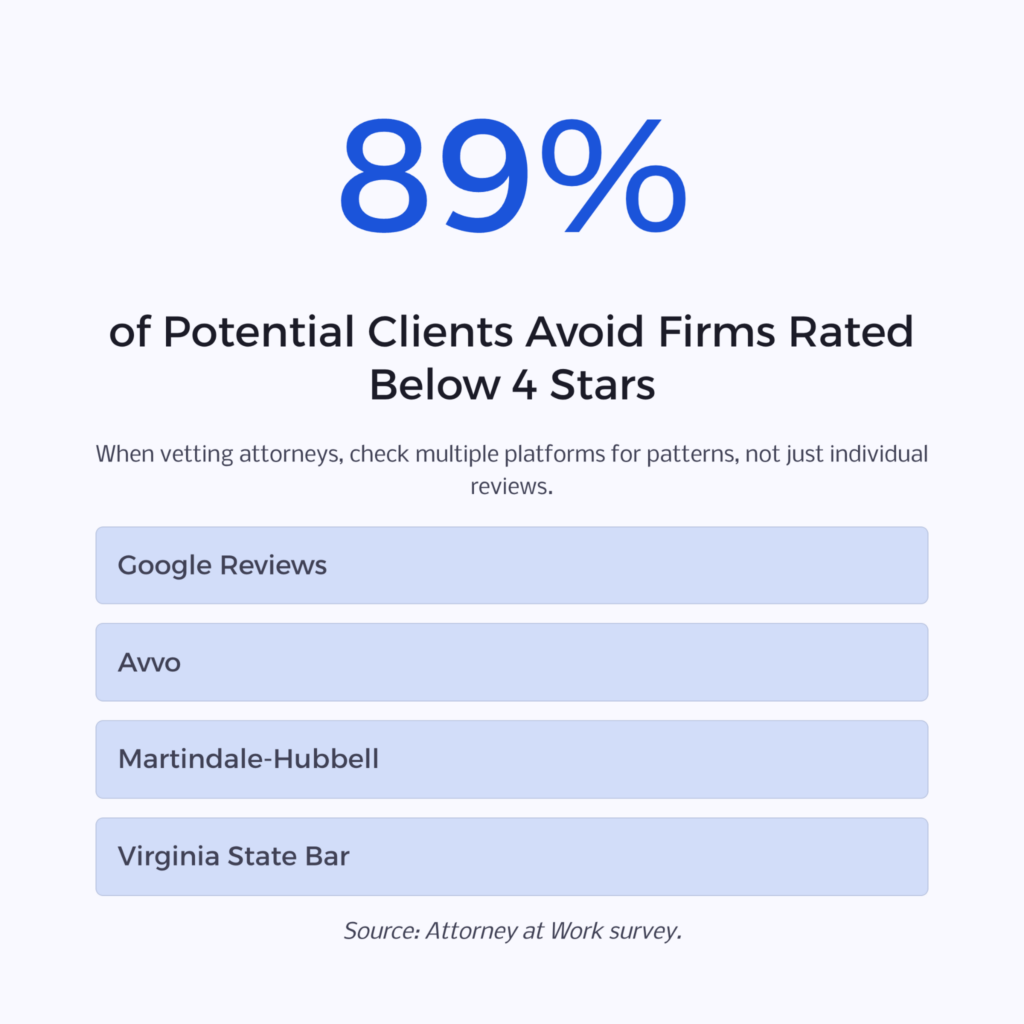
Before hiring any attorney, check their online reviews and their standing with the state bar. One survey found that 89% of potential clients would avoid a firm with ratings below 4 stars.
Look for patterns, not just individual reviews. A single negative review among dozens of positive ones is normal. But consistent complaints about the same issues (unreturned calls, surprise bills, lack of communication, pressure to settle early) indicate a systemic problem.
Where to check:
- Google Reviews for overall client satisfaction
- Avvo for peer ratings and client reviews
- Martindale-Hubbell for peer review ratings from other attorneys
- Virginia State Bar for any disciplinary history or public reprimands
The Leiva Law Firm maintains a 5.0/5.0 Google rating at our Fairfax location, a 10.0 “Superb” rating on Avvo from 13 client reviews, and an AV Preeminent rating from Martindale-Hubbell with a 4.9/5.0 peer review score.
Red Flag Summary
| Red Flag | What It Signals | What to Do |
| Guarantees a specific outcome | Inexperience or desperation | Ask for a realistic range of outcomes instead |
| Requests upfront payment | Non-standard fee arrangement | Confirm they work on contingency with no fees unless you win |
| Vague or restrictive retainer agreement | Potential hidden costs or one-sided terms | Read every clause; ask for clarification on anything unclear |
| No verifiable PI case results | Lacks depth in personal injury law | Ask for specific settlement and verdict examples |
| No trial experience | Cannot credibly threaten trial if needed | Ask how many PI cases they’ve tried and the outcomes |
| Poor communication during consultation | Will only get worse after you hire them | Note response times and quality of answers during the vetting process |
| Unsolicited contact after your accident | Likely unethical solicitation | Work with attorneys you found through your own research or referrals |
| Low ratings or bar discipline history | Pattern of client dissatisfaction or ethical issues | Check Google, Avvo, Martindale-Hubbell, and the Virginia State Bar |
What a Good Personal Injury Attorney Looks Like
Knowing the red flags is half the equation. Here’s what you should expect from a qualified personal injury attorney:
- A clear, written fee agreement. Contingency fee, typically 33% to 40%, with all costs and terms explained upfront.
- Verifiable case results. Specific settlement and verdict amounts the attorney can point to. Not vague claims, but documented outcomes.
- Actual trial experience. An attorney who has taken cases to verdict, not just settled every claim.
- Direct access to your attorney. You should know who is handling your case and be able to reach them.
- An honest initial assessment. The consultation should give you a realistic picture of your case, not a sales pitch.
- A free consultation for personal injury matters. Standard practice for reputable PI attorneys. You should not pay to find out whether you have a case.
Schedule a Free Personal Injury Consultation
If you or a family member has been injured in an accident in Northern Virginia, The Leiva Law Firm offers free personal injury consultations. Manuel Leiva will personally review your case, explain your options, and give you an honest assessment of what your claim is worth.
With over 25 years of trial experience, Top Lawyer recognition in personal injury from Northern Virginia Magazine, and a track record that includes a $4 million TBI settlement, you’ll be working with an attorney who has the credentials, the courtroom experience, and the results to back it up.
Call (703) 352-6400 or contact us online to schedule your free consultation. Se habla español.

