



Can a First-Time DWI/DUI Be Dismissed in Virginia?
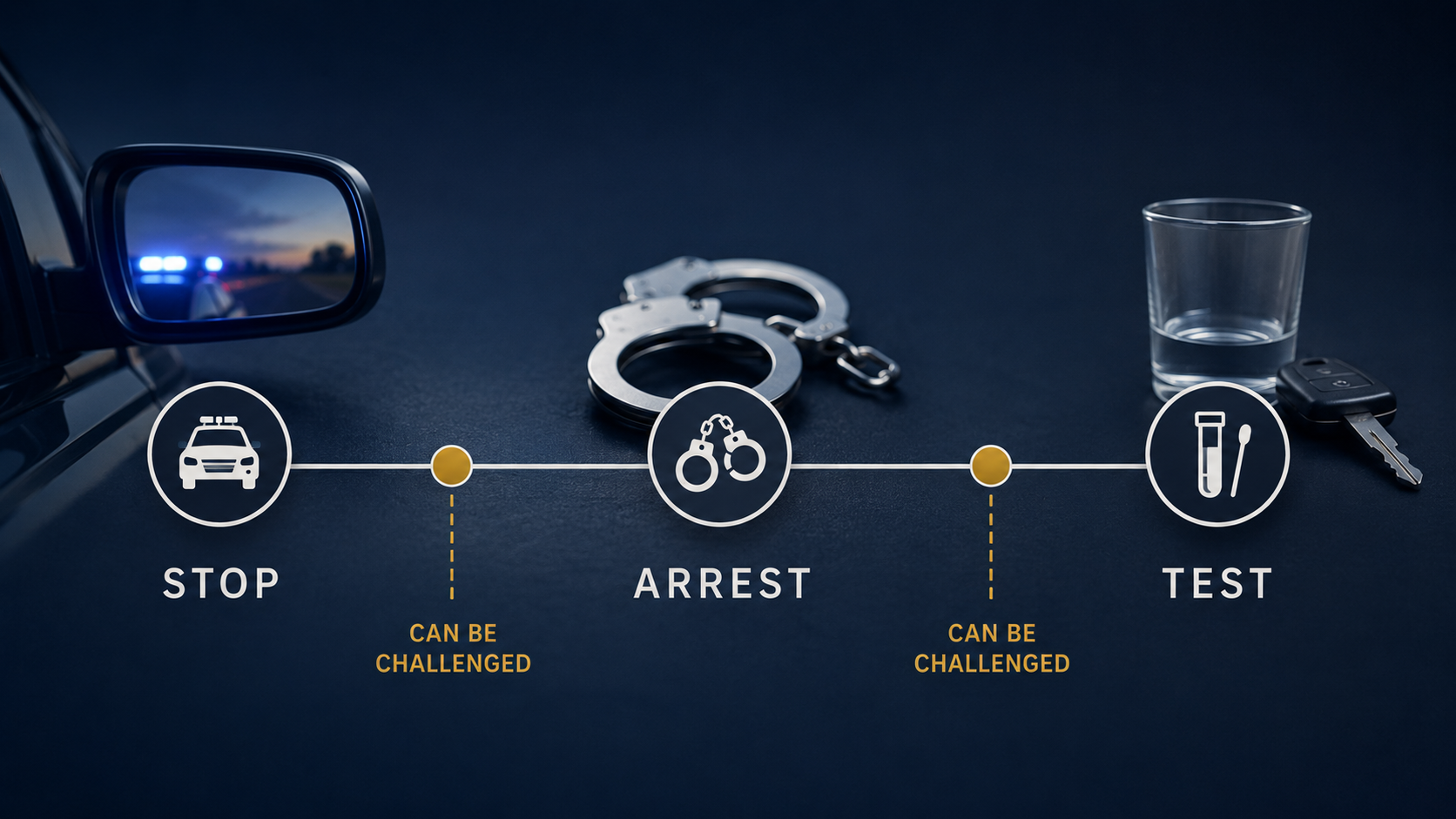
Yes, a first-time DWI/DUI can be dismissed in Virginia. Dismissal turns on whether something in the Commonwealth’s case breaks, such as an unlawful stop, a missing element of proof, a breath test problem, or a procedural violation. Virginia has no first-offender diversion program that erases a DWI/DUI, so a favorable outcome depends on identifying a real defect in the evidence.
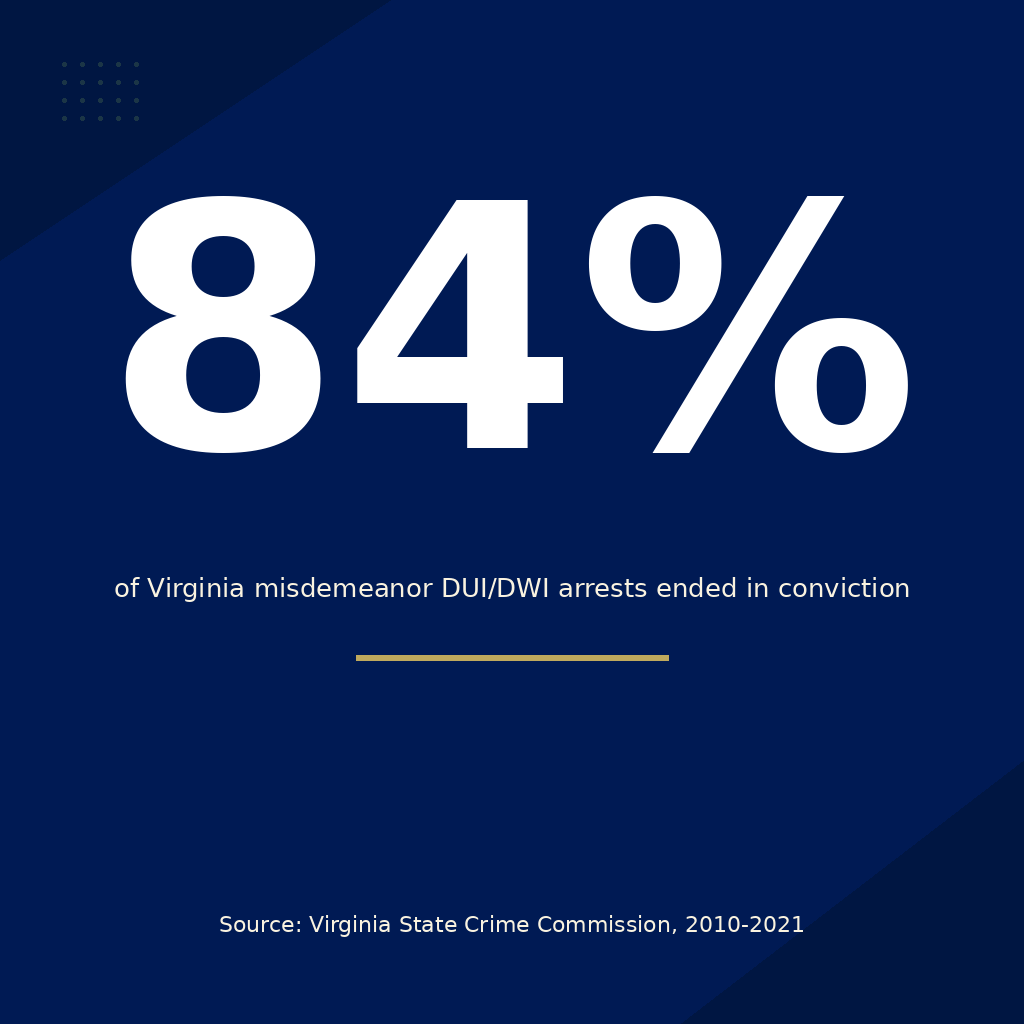
Official state data make the scale of the problem clear. The Virginia State Crime Commission found that 84% of misdemeanor DWI/DUI arrests between 2010 and 2021 ended in a conviction, and that only 7% of those convictions were for reckless driving rather than DWI/DUI.
At The Leiva Law Firm, we defend DWI/DUI charges across Northern Virginia. What separates the cases that get dismissed or reduced from the ones that do not is whether the stop, the testing, and the procedure get attacked early and correctly.
Is Dismissal Realistic for a First-Offense DWI/DUI?
Many people hear “first offense” and assume the system will go easy on them. Virginia does not work that way. A first violation of Va. Code § 18.2-266 is a Class 1 misdemeanor, the same classification as many serious misdemeanor criminal charges. There is no automatic break for a clean record, which is why people facing a first charge often start by talking to a Fairfax DWI/DUI lawyer about what the evidence actually shows.
A first DWI/DUI is most often dismissed through one of these routes:
- The Commonwealth cannot prove an element of the offense beyond a reasonable doubt, such as operation or impairment.
- A motion to suppress succeeds, excluding the breath result or everything that followed an unlawful stop or arrest.
- A refusal charge is found reasonable, or the implied consent law was not properly invoked.
None of these depends on who you are. They depend on what the evidence shows and whether anyone holds the Commonwealth to its burden.
Why Virginia Treats a First DWI/DUI So Strictly
Some states route first-time offenders into diversion or deferral programs that dismiss the charge after classes and a clean period. Virginia does not offer a DWI/DUI diversion of that kind. The Virginia Alcohol Safety Action Program (VASAP) is a post-conviction requirement under Va. Code § 18.2-271.1, not a way to make the charge disappear.
On a conviction, the consequences are fixed by statute and several of them are mandatory:
- A mandatory minimum fine of $250, up to a $2,500 maximum.
- Up to 12 months in jail.
- A 12-month license suspension under Va. Code § 18.2-271.
- Required VASAP enrollment.
- Ignition interlock as a condition of any restricted license under Va. Code § 18.2-270.1.
A DWI/DUI conviction also cannot be expunged. Under Va. Code § 19.2-392.2, expungement reaches charges that ended in acquittal, nolle prosequi, or dismissal, not convictions. The conviction stays on the Virginia DMV record for 11 years. That permanence is exactly why the work to challenge the charge happens before a conviction, not after.
First-Time DWI/DUI Penalties in Virginia by BAC Level
Your blood alcohol concentration changes the penalty, especially the mandatory jail thresholds. There is no mandatory minimum jail for a first offense below 0.15, and that changes at higher readings.
| BAC level | Mandatory minimum jail | Fine | License | Other |
|---|---|---|---|---|
| 0.08 to 0.14 | None (up to 12 months possible) | $250 minimum, $2,500 maximum | 12-month suspension | VASAP; interlock for restricted license |
| 0.15 to 0.20 | 5 days | $250 minimum | 12-month suspension | VASAP; interlock |
| Above 0.20 | 10 days | $250 minimum | 12-month suspension | VASAP; interlock |
| Any BAC with a passenger 17 or younger | Additional 5 days | Additional $500 to $1,000 | 12-month suspension | VASAP; interlock |
Source: Code of Virginia §§ 18.2-270 and 18.2-271
Penalties summarized from Va. Code § 18.2-270 and related sections.
The jump at 0.15 matters more than people expect. The difference between a 0.14 and a 0.15 reading is five days in jail that the judge cannot suspend. When a result sits near that line, challenging the accuracy of the testing becomes central to the defense.
What Dismissed, Reduced, Acquitted, and Expunged Actually Mean
People often use these words interchangeably when they are looking for help at 2 a.m. They are not the same, and the difference shapes what is realistic in a given case.
| Outcome | What it means | Conviction on your record? |
|---|---|---|
| Dismissal | The charge is dismissed before or without a finding of guilt, often on a successful motion to suppress or when the prosecutor seeks a nolle prosequi | No |
| Acquittal | After trial, the judge or jury finds the Commonwealth did not prove the case beyond a reasonable doubt | No |
| Reduction | The DWI/DUI is amended to a lesser charge, commonly reckless driving | Yes, for the lesser offense |
| Expungement | Removing the charge from your record, available only where there was no conviction | Not available after a DWI/DUI conviction |
One technical point matters here. When a prosecutor abandons a charge, they seek or move for a nolle prosequi, and under Va. Code § 19.2-265.3 the court must approve it for good cause shown. When a charge is reduced, it is amended. These distinctions decide whether you walk away with nothing on your record, a lesser conviction, or the original charge.
What Actually Gets a First DWI/DUI Dismissed or Reduced
A dismissal in Virginia traces back to a specific, identifiable flaw. Below are the grounds that move cases, and what each one challenges. Several of them are covered in more depth in our guide to common DWI/DUI defenses in Virginia.
| Defense ground | What it challenges | Possible effect |
|---|---|---|
| No reasonable articulable suspicion for the stop | The legality of the initial traffic stop | Later evidence suppressed, often ending the case |
| No probable cause to arrest | The legality of the arrest | Post-arrest evidence, including BAC, suppressed |
| Field sobriety test problems | How the tests were administered and scored | Weakens probable cause and the weight of the evidence |
| Breath test accuracy and calibration | The reliability of the breath result | Exclusion of the breath result, removing the per se case |
| Improper test administration or chain of custody | Compliance with the implied consent procedures | Can undermine the certificate of analysis |
| Implied consent not properly invoked | Whether the arrest was lawful and timely | Refusal charge dismissed |
Problems With the Traffic Stop
A stop requires reasonable articulable suspicion. If an officer pulled someone over without a lawful basis, everything obtained afterward can be subject to suppression. A successful motion on the stop frequently ends the case, because the breath result and the field tests fall with it. The Leiva Law Firm secured a dismissal in a third-offense DWI/DUI on exactly this basis, after establishing that the stop was unlawful.
No Probable Cause to Arrest
Even if the stop was lawful, the arrest itself needs probable cause. Where the officer’s observations were thin or the field tests were poorly administered, the basis for the arrest can be contested, and the evidence collected after it may be excluded.
Field Sobriety Test Problems
The three standardized field sobriety tests, horizontal gaze nystagmus, walk-and-turn, and one-leg-stand, are designed to be administered according to a fixed procedure, and their evidentiary weight depends on whether that procedure was followed. Performance is affected by medical conditions, footwear, uneven pavement, weather, flashing lights, and ordinary nervousness. The horizontal gaze nystagmus test in particular requires precise administration that is often done wrong. Bodycam and dashcam footage is what shows whether the tests were given correctly.
Breath Test Issues
A reliable breath result depends on the instrument being properly maintained and calibrated and on the test being administered correctly. Two areas draw the most scrutiny.
The 20-minute observation period
Before the breath test, the operator is supposed to observe the suspect to ensure nothing affects the reading. Gaps or interruptions in that observation period are a documented line of challenge.
Calibration and maintenance records
The instrument’s logs can reveal whether the device was within tolerance. Where the records show it was not, the breath result can be challenged and, in some cases, excluded.
Blood Draw and Chain of Custody
When a blood test is used, the sample must be drawn, stored, and analyzed under the procedures set out in Va. Code § 18.2-268.9. A break in the chain of custody or a deviation from the handling rules can undermine the certificate of analysis the Commonwealth relies on.
Implied Consent and Refusal Defects
Under Va. Code § 18.2-268.2, anyone who operates a motor vehicle on a Virginia highway is deemed to have consented to a breath or blood test if arrested for DWI/DUI within three hours of the alleged offense. A first refusal under Va. Code § 18.2-268.3 is a separate civil offense that carries its own one-year license suspension, on top of any DWI/DUI suspension.
The roadside preliminary breath test is a separate thing entirely. Under Va. Code § 18.2-267, a driver has the right to refuse it, that refusal is not evidence in the prosecution, and the result is not admissible to prove guilt. Many drivers do not know this.
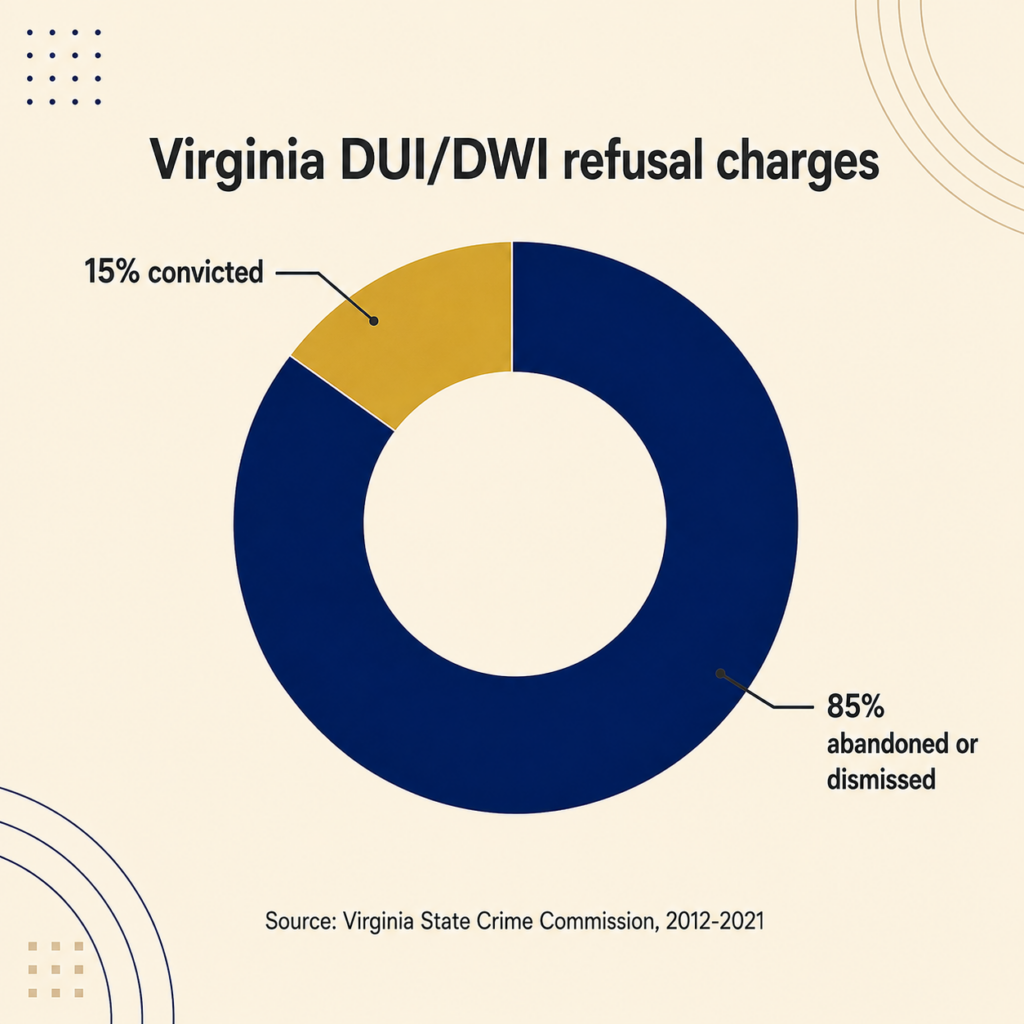
Refusal charges are contested more successfully than people assume. The Virginia State Crime Commission found that only 15% of DWI/DUI refusal charges filed between 2012 and 2021 resulted in a conviction, and that the vast majority were nolle prosequi or dismissed.
The Rising BAC Defense
Alcohol takes time to absorb. A driver’s BAC can be lower at the moment of driving than it is when the breath test is administered at the station. Where the timeline supports it, this rising BAC argument can create reasonable doubt on the per se charge.
How Your BAC Changes the Leverage
The facts that give a defense the most room are a lower BAC, no accident, a clean record, and a genuine legal flaw in the stop or the testing. Those cases are the strongest candidates for pushing toward a dismissal or a reduction.
Higher readings change the calculus. A BAC of 0.20 or above, an accident, a passenger 17 or younger, or an accompanying refusal charge all make a dismissal harder and shift the focus toward suppressing specific pieces of evidence, mitigation, and preserving every procedural option. None of that means the case is hopeless. It means the strategy has to match the facts.
What Does Not Get a DWI/DUI Dismissed
It is worth being honest about what does not move a Virginia DWI/DUI case, because clients are often surprised:
- Being a good person with no prior record.
- Having a steady job or a family depending on you.
- It being a first mistake.
- “I only had two drinks.”
Judges and prosecutors hear all of these constantly. They do not create reasonable doubt and they do not suppress evidence. Sympathetic facts may help at sentencing if a conviction occurs, but they are not the reason a charge gets dismissed. A defect in the Commonwealth’s case is.
Reduction to Reckless Driving and the “Wet Reckless” Outcome
For many first offenses, the realistic good outcome is a reduction to reckless driving rather than an outright dismissal. When a DWI/DUI is amended to reckless driving, it is informally called a “wet reckless.” A “dry reckless” is a reckless driving charge with no alcohol element at all.
A reduction to reckless driving is still a Class 1 misdemeanor. It carries up to 12 months in jail and/or a fine of up to $2,500, and your privilege to drive can be suspended for up to six months. What it avoids is the mandatory 12-month DWI/DUI suspension, the mandatory interlock, and the DWI/DUI label itself.
There is also a common myth worth correcting. Virginia law does not statutorily forbid prosecutors or judges from amending or dismissing a § 18.2-266 charge. The real limits are prosecutorial policy and the strength of the evidence. Reductions are discretionary, and the Crime Commission data shows they account for a small share of dispositions, less often still when the BAC is high or an accident occurred.
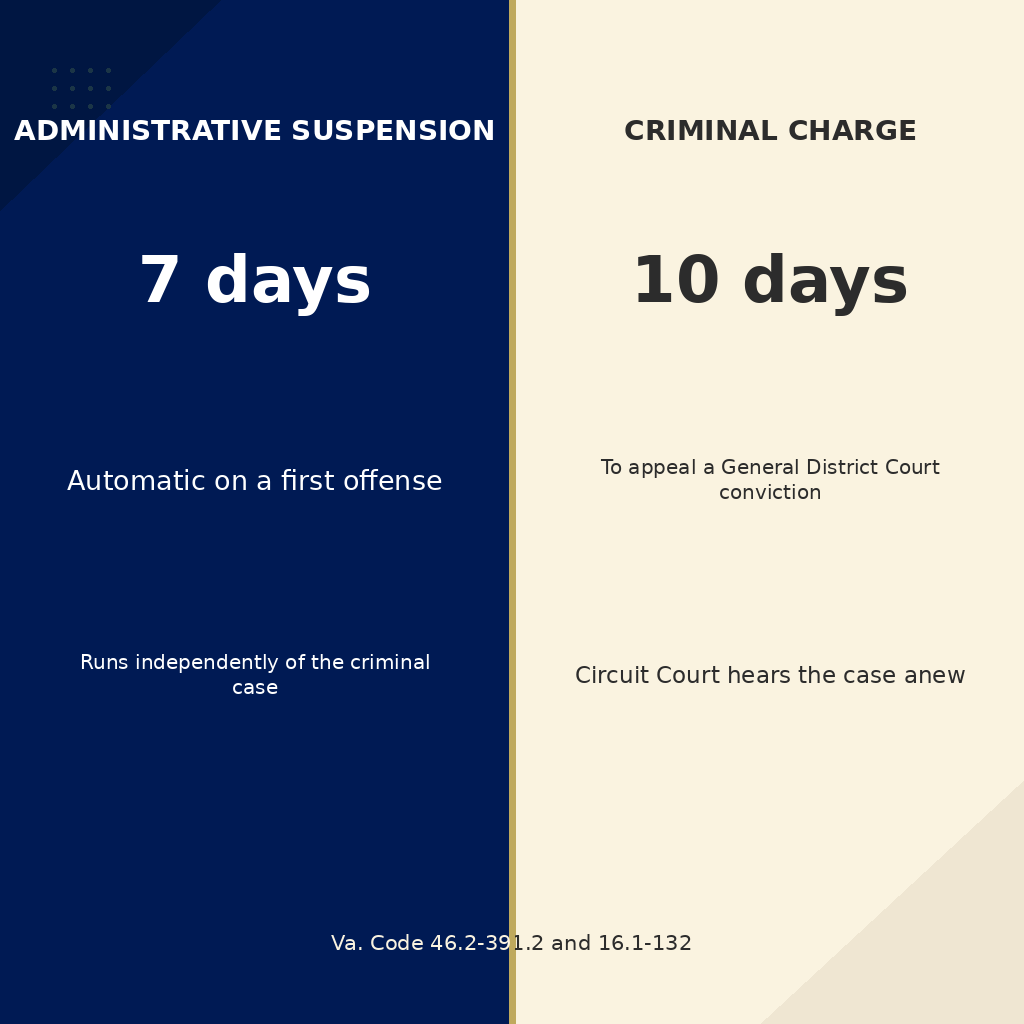
The Criminal Charge and the Administrative License Suspension
A first DWI/DUI arrest sets two separate things in motion, and people often confuse them.
The administrative license suspension
Independent of the criminal case, Va. Code § 46.2-391.2 triggers an immediate seven-day suspension of the license on a first offense. It runs on its own track and is reviewable by the general district court where the arrest was made.
The criminal charge
A first-offense misdemeanor DWI/DUI is heard in the General District Court, where a judge decides the case. There is no jury at that level. Under Va. Code § 16.1-132, a defendant convicted there has the right to appeal to the Circuit Court within ten days, whether or not the conviction followed a guilty plea, and the Circuit Court hears the case anew. A jury becomes available at that stage.
That appeal window is short and unforgiving. The attorney you choose matters here. If the prosecutor expects that your attorney is not going to try the case, the plea offer will reflect that.
Why Early Lawyer Involvement Matters
The evidence that wins a suppression motion has a short shelf life. Bodycam and dashcam footage gets overwritten. Calibration and maintenance logs for the breath instrument have to be requested. The officer’s field sobriety notes and the Department of Forensic Science certificate of analysis need to be obtained and reviewed. Getting counsel involved quickly is what preserves these records before they are gone.

Manuel Leiva has tried cases ranging from traffic offenses to serious felonies over more than 25 years of trial experience. That background shapes how the firm approaches a first DWI/DUI. Every case is prepared as though it will go to trial.
How to Vet a DWI/DUI Lawyer in Virginia
Not every attorney who advertises DWI/DUI defense litigates the technical issues that get cases dismissed. Before you hire anyone, ask direct questions:
- Have you litigated breath instrument maintenance and calibration records, and obtained them through discovery?
- How often do you take DWI/DUI cases to trial rather than resolving them by plea?
- Do you know the reduction practices of the prosecutors in this specific court, whether that is Arlington, Alexandria, Fairfax, Loudoun, or Prince William?
- What did you find wrong with the stop or the testing in cases you have handled?
The answers tell you whether someone treats a DWI/DUI as a criminal case to be investigated or as a form to be filed.
What a Realistic Good Outcome Looks Like
Here is the honest summary. A first-time DWI/DUI in Virginia can be dismissed, and it happens when the stop, the arrest, or the testing has a real defect. The more common favorable result is a reduction to reckless driving, and even that depends on the facts and on the prosecutor’s discretion. Most DWI/DUI arrests in Virginia end in conviction, which is precisely why the challenge matters.
The work is the variable you can control. Preserve the evidence early, attack the threshold issues first, know where your BAC puts you, and work with someone who will hold the Commonwealth to its proof.
If you or a family member is facing a first DWI/DUI charge in Northern Virginia, contact The Leiva Law Firm to review the specific facts of your case and the options available to you.

